Bhutan - Culture
People
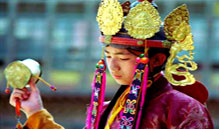
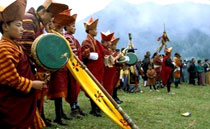
Early records suggest scattered clusters of inhabitants had already settled in Bhutan when the first recorded settlers arrived 1,400 years ago. Bhutan's indigenous population is the Drukpa. The estimated population of the country is 6,50,000 with the growth rate of 3.1% per year. The country is still predominantly rural and about 85% of the people live in villages.
Three main ethnic groups constitute its population :-
Sharchops:- The Sharchops, who live in the east of the country, are recognised as the original inhabitants of Bhutan. They are Indo-Mongoloid. Their name Sharchop is translated as 'people of bhutan'.Lhotshampas: This Nepalese group, began settling in the south of Bhutan in the late 19th century. The Lhotshampa represents different Nepali speaking ethnic groups primarily – Brahman, Chettri, Gurung, Rai and Limbu.
Ngalops: They are descendants of Tibetan immigrants who arrived in Bhutan from 9th century and settled in the west of country. they dominate the region west of the Black Mountains.
Languages
Bhutanese speak one or more of four major, mutually unintelligible languages. The official language is Dzongkha which is a Tibetan dialect mostly spoken by Bhotes. Additionally three other languages are also spoken (1.) Bumthangkha in the central region, (2.) Sharchopkha in the eastern region and (3.) Nepalese in the southern region. Many educated Bhutanese are, in addition to their native language, also fluent in Hindu and English.
Seven other Khen and Mon languages also are spoken in Bhutan. The national newspaper, Kuensel, is published in three languages: English, Dzongkha and Nepali. In the monastic schools, Choekey, the classical Tibetan language, is taught.
Religion
Buddhism is practiced throughout the country though most Bhutanese people of Nepali and Indian descent are Hindus. Minority groups practice various forms of ancient animistic religions, including bon, which predates Himalayan Buddhism. Bhutan is the last bastion of the Mahayana form of Buddhism in the world today. It was in the 8th century AD that Guru Padma Sambhava introduced Buddhism to the country. Subsequently this was promulgated by various other religious figures who visited Bhutan.
The Bhutanese are very pious people and religion plays an important part of their daily lives. Prayer flags fluttering in the wind, chortens (stupas), monasteries and twirling prayer wheels are a very common sight.
Bhutan’s official religion is Drukpa Kagyu, a school of Tantric Mahayana Buddhism. It is similar to the Buddhism of Tibet, but has unique beliefs and practices.